The Changes: Part 2
Normalcy is a funny thing. Think of every room you've ever been in and questioned at some point the very reason for being there. Everything feels as it should, dust laid to rest in all the right places. As the hours of the day wither, you come to realize just how typical and familiar it all feels, and comfortable because of it. Whether it's your job, conversations you have, or the every day things you do, the knife of routine gets embedded so deeply that you lose the power to distinguish the handle from the blade, leading to the arrival of a new reality you involuntarily accept, though anticipate nonetheless.
On November 4th 2015, my son Joseph underwent his final chemotherapy treatment. Occasional work meetings aside, every Wednesday for 48 weeks was spent at the Bass Center at Lucile Packard Children's Hospital in Palo Alto. On the mound of each week, time would drop like an anchor, only one designed to inspire motion, to steer ahead from something unthinkable though what began to feel surprisingly ordinary. Following our son's first post-treatment scans, it felt like we were reintroduced to the world, from one reality to another. And like wild animals released from captivity, we had no idea what to expect.
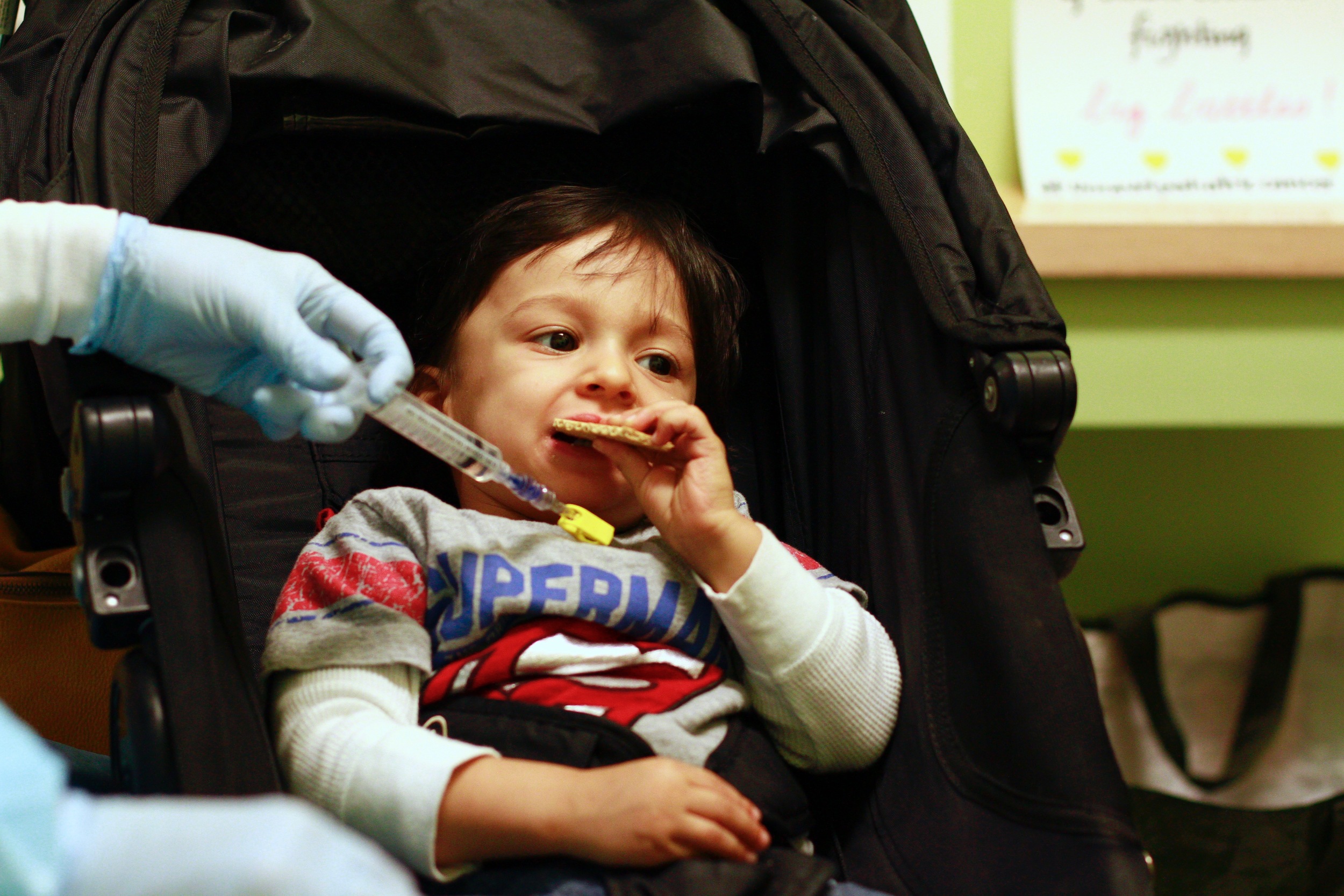
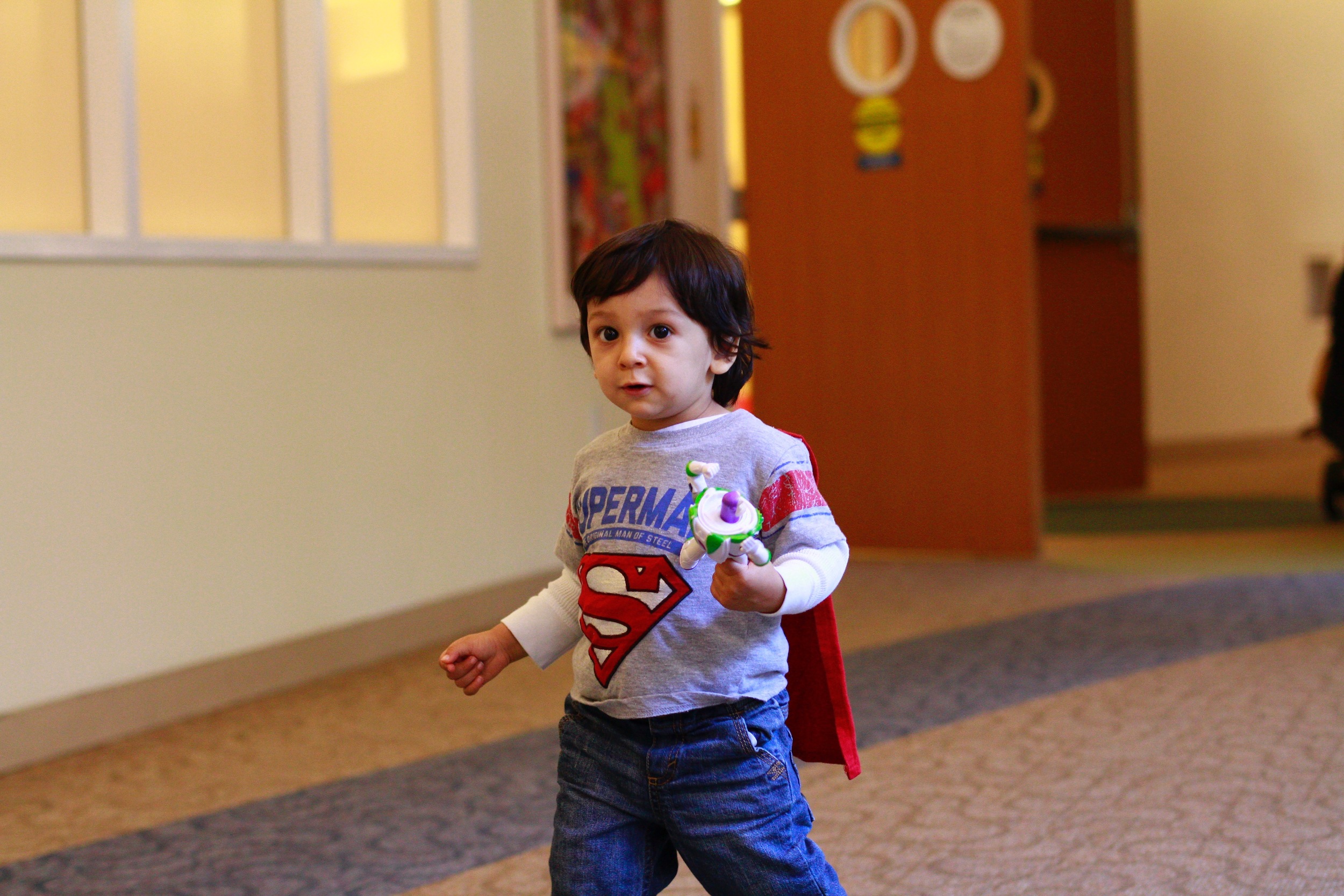
The days would usually start like any other. My sons and I would wake up around 7:00 a.m., sometimes 8:00 if I pushed it. I would feed them breakfast and put on an episode of Sesame Street (always the go to). While they ate, I would check the news, Facebook, and before the film’s release, watch the trailer for The Force Awakens repeatedly. After dropping Sammy off at the in-laws, Joseph and I would make the trek to Palo Alto. In the room, Joseph would sit in his stroller as Finding Nemo or Toy Story played on the small television, while his insides were doused with medicine. Despite his young age, he would remain still, almost unabashed, and take it with little to no issue. He created bonds with the nurses, one in particular, Gailene, whom he would damn near rip himself from his stroller to hug.
He was known as the "easy one" among the staff due to his calm and playful demeanor. Whether they were accessing the port in his chest for labs, or preparing to administer the chemo, he always seemed happy to be there. He would watch his movie, deliver a smile to anyone who entered the room, walk around a bit (after he learned to walk) and we would leave. This was our routine. And it was one I couldn't help but think I would be sad to leave behind. This was a moment shared between my son and I. And we shared it every week. I became the figure he sought when he felt scared or emotional, the parental brick, though out of shape, he could lean on. He was too young to understand what was happening and why we made these weekly trips. For all he knew, this was a totally awesome theme park that traded lines for waiting rooms, rides for movies, comfort for health.
When the day of his last treatment arrived, the emotions I had always expected to surface were almost non-existent. I was flooded with relief, though stunned by the idea that I would somehow miss this place, these people. I would no longer be required to battle the traffic every week, or have to subject one of my days off to these appointments, hindering plans that would normally include our then three-year-old son Sammy. This routine was coming to an end. And I wasn't prepared for it. It feels so strange now. Normalcy is what this eventually introduced, and as curious as it sounds, was oddly comforting. I have no illusions, of course. I know my outlook would be different had this resulted in any other way, had Joseph not responded so well to the treatments, or was diagnosed with a more severe form of cancer. I don't give a shit about luck or religion, as I'm not convinced that either played any kind of role in our situation. We survived the year, as did he, and that was good enough for us.
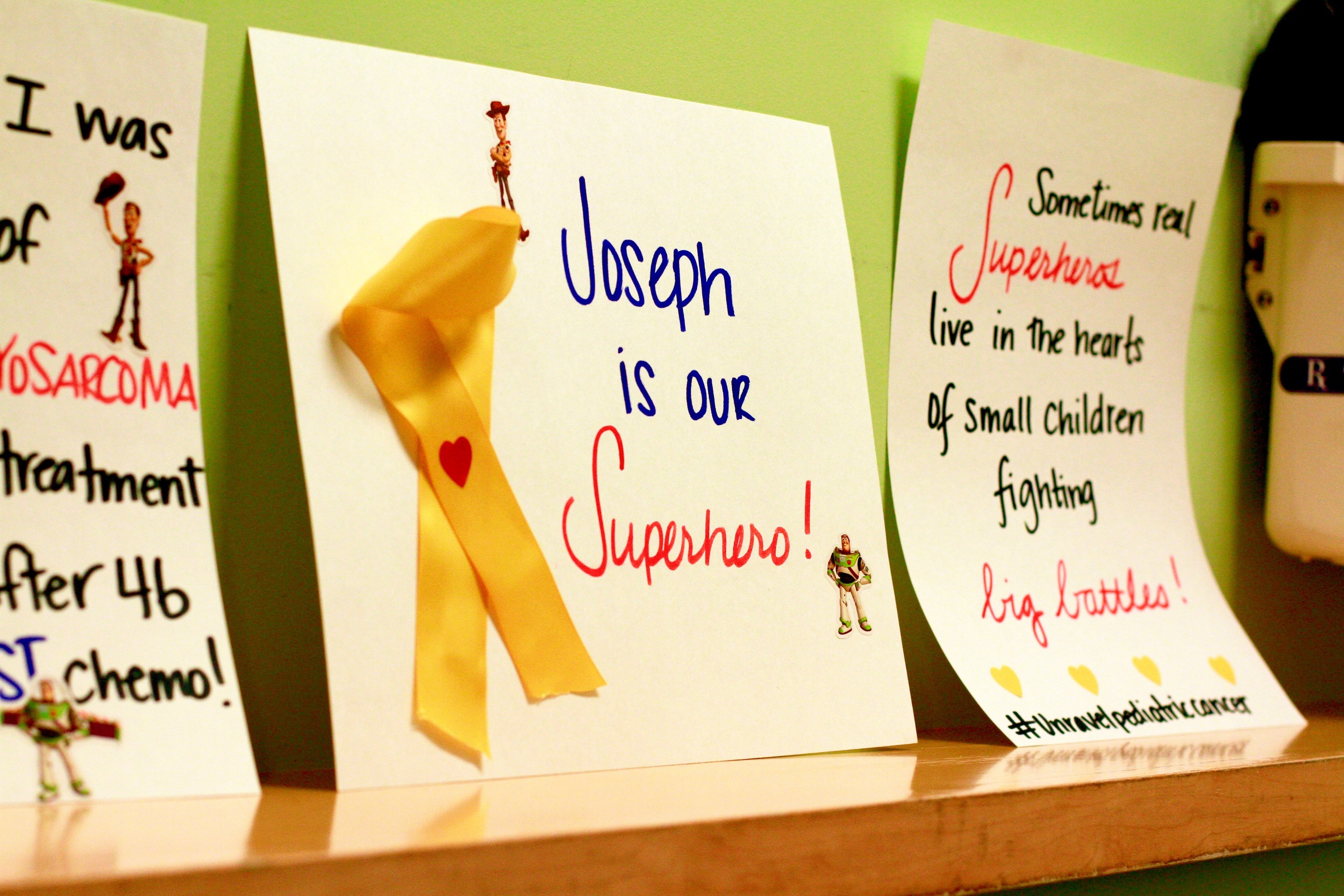
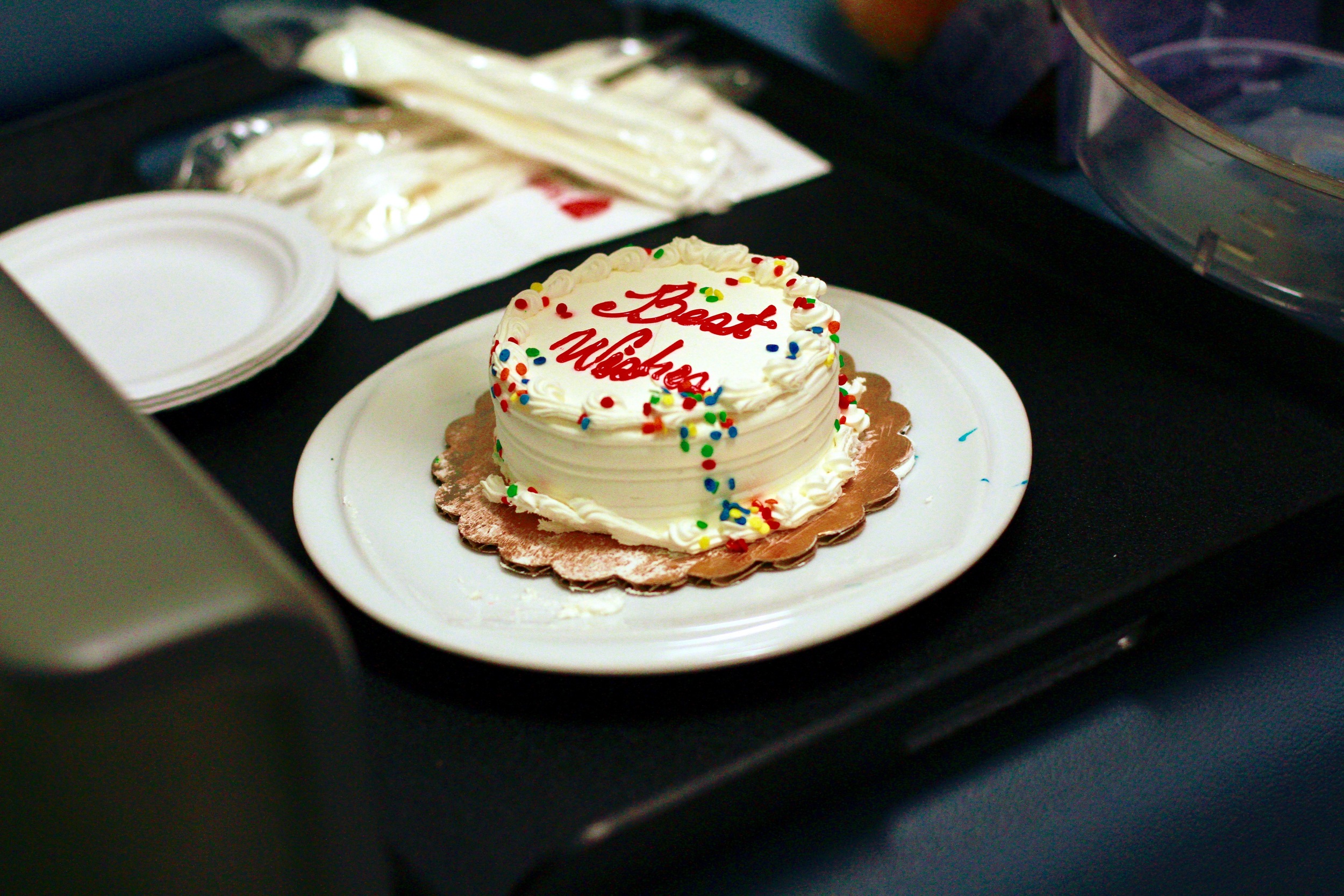
The following collection of images were taken on his last day of chemo. My wife Josephine made posters to honor the event, and the staff of the Bass Center made a cake for him which was ushered in by a team of nurses who sang an end-of-therapy song to him. A gesture we will never forget. This entire year has been comprised of moments I felt not only strengthened our marriage but my own understanding of the concept of family values and what it means to be a father. These ideas were never lost on me, but having to witness my son go through what he did is something I hope I'll never have to relive, though in some weird way, am glad I did. We were there for our son, and aided him throughout this entire ordeal. Every page in this story has been bookmarked, a memory on which we'll reflect in the face of more family hurdles in the future. With anything, with life. It's not a manual. It's simply a notebook of experiences.
As I write this, I am overcome by the amount of support we've received from our family and friends. It's not easy to ask a parent how their sick child is coping. Fortunately for us, the answer was always a positive one. The situations to which I was preview of some of the other patients in the waiting room will stay with me forever. There are struggles I can't even pretend to fathom. I wouldn't want to. But I know our membership in that particular group has yet to expire. That's a fear that remains current. Dormant, but very much alive. Over the next few years, Joseph will need to undergo quarterly scans to monitor his condition and ensure there isn't a group of cells hiding behind a tree, in a trashcan, or under a lamp shade somewhere in his body. We hope we've seen the last of it. In Part 1 of this blog, I wrote of a shadow I knew would always be with us. It doesn't matter, though. Because so will our son.